

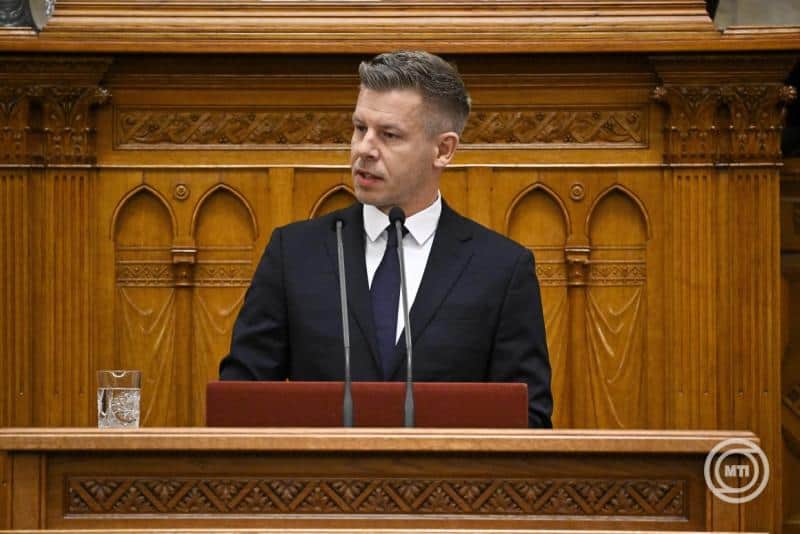
Hungarian Prime Minister Péter Magyar joined 21 other European Union heads of state and government in signing a joint letter criticising Spanish Prime Minister Pedro Sánchez’s migration policy after around 49,000–50,000 people entered Ceuta, the Spanish-controlled territory in North Africa, from Morocco within a short period. According to reports, at least 57 people died during the mass border crossings and attempts to reach the enclave by sea, while the overwhelming majority of those who arrived have since returned to Morocco. The signatories argued that the Spanish government’s measures could weaken the protection of the European Union’s external borders and send the message that unlawful entry may later be converted into legal residence. Madrid rejected the criticism, stressing that none of the people who recently entered Ceuta would qualify for Spain’s regularisation programme. The EU leaders called for an urgent meeting of interior ministers, stronger Frontex support and, if necessary, the temporary reintroduction of internal border controls within the Schengen Area.
Tens of thousands crossed from Morocco into Ceuta
Around 49,000–50,000 people entered Ceuta from Morocco over the past few days. The mass crossings placed extraordinary pressure on the territory’s authorities and reception system.
Reports indicate that at least 57 people died during the border crossings and attempts to reach Ceuta by sea. The available information does not provide detailed accounts of the circumstances surrounding the deaths, which may require further official investigation.
Hungarian Foreign Minister Anita Orbán said her Spanish counterpart, José Manuel Albares, had informed her that the overwhelming majority of the arrivals, approximately 48,000–49,000 people, had already returned to Morocco. The collapse of Ceuta’s reception system may also have contributed to their departure.
According to the information released, the temporary reception centre reached full capacity and local services were unable to cope with the sudden influx. Many people were reportedly left on the streets without adequate access to food or drinking water.
Twenty-two EU leaders demand coordinated action
Péter Magyar signed the joint letter together with 21 other EU leaders, calling for an immediate and coordinated European response. The document was addressed to European Council President António Costa, European Commission President Ursula von der Leyen and the Irish presidency of the Council of the European Union.
The signatories said Spain’s migration measures could weaken the protection of the EU’s external borders. In their view, member states must act together to eliminate incentives for unlawful border crossings.
They were particularly critical of Spain’s plan to regularise the status of as many as 1.2 million migrants currently staying in the country without legal permission. According to the letter, such a large-scale programme could suggest that irregular entry may eventually lead to lawful residence.
The leaders therefore argued that the European Union must not create such expectations. They called for stronger external border protection and the removal of what they described as “pull factors”.
Madrid says the latest arrivals are not eligible for regularisation
The Spanish government rejected the criticism from its European partners. Madrid insisted that none of the people who recently entered Ceuta would be eligible to take part in the regularisation programme.
Spanish officials said the programme was subject to strict conditions. Only people who had already been living in Spain before January 1, 2026, and had been continuously present in the country for at least five months when submitting their application, were allowed to apply.
The Spanish Foreign Ministry also stressed that the application deadline had already expired in June. The people involved in the latest events in Ceuta would therefore be excluded on timing grounds alone.
Madrid argues that it is consequently unfounded to suggest that the programme directly encouraged the recent crossings. The signatories of the joint letter, however, are concerned not only about the current eligibility rules but also about the broader political message sent by the scheme.
Leaders also raised the possible impact of a Spanish court ruling
According to Anita Orbán, the signatory states believe that a ruling issued by Spain’s Supreme Court earlier in the month may also have contributed to the mass arrivals. The decision stated that people intercepted at sea after attempting to swim across the border could not be immediately returned.
For the time being, this remains a political assessment rather than a proven causal connection. The available material contains no official or judicial finding directly linking the ruling to the events in Ceuta.
The joint letter nevertheless argued that border management rules must be clear and enforceable. The leaders said legal or political decisions must not be allowed to appear as incentives for irregular entry.
Orbán compared the events to the European migration crisis of 2015. She said the situation in Ceuta evoked troubling memories of a period when Europe’s external borders came under exceptional pressure.
An emergency video conference of interior ministers has been requested
The 22 leaders called for urgent talks at EU level. They asked the Irish presidency of the Council of the European Union to convene an extraordinary video conference of the bloc’s interior ministers.
The meeting would be intended to coordinate further action. According to the letter, member states would discuss stronger external border protection, the role of Frontex and cooperation with Morocco.
The signatories called for increased assistance from the European Border and Coast Guard Agency. They also want the effectiveness of cooperation between the European Union and Morocco on migration management to be reviewed.
The document makes clear that the leaders consider a rapid and unified response essential. In their view, isolated national measures are insufficient to address a situation that could affect the entire Schengen Area.
Internal Schengen border controls could be temporarily restored
The signatories also indicated that they were prepared, if necessary, to temporarily reintroduce internal border controls within the Schengen Area. This would mean that some member states could once again carry out checks on travellers arriving from other EU countries.
The letter does not specify which countries might take such action, which border sections could be affected or how long the controls would remain in place. At this stage, the proposal is therefore a political warning and a possible response rather than an adopted measure.
The leaders said the option may be needed to prevent people who entered irregularly from moving through the Schengen Area without effective checks. The Spanish government strongly opposes this approach.
Pedro Sánchez said proposals to suspend Spain’s Schengen participation or broadly restore internal border controls would conflict with European law, humanitarian principles and solidarity within the EU.
Pedro Sánchez accused his critics of prejudice and political opportunism
In a letter of his own, the Spanish prime minister sharply criticised the response from his European counterparts. Sánchez said several member states were reacting on the basis of prejudice, misinformation, ignorance or domestic political interests.
He argued that the European Union could not afford selfish, divisive and, in his view, unlawful measures. According to the Spanish government, member states should prioritise solidarity and common European rules.
The dispute therefore extends beyond the immediate situation in Ceuta and concerns the broader direction of EU migration policy. One side is demanding stricter border protection and the removal of incentives, while Madrid says the criticism disregards the actual conditions of Spain’s measures.
This difference in approach is likely to dominate the next round of EU talks. A particularly sensitive issue will be the extent to which national regularisation programmes remain solely within the competence of individual member states and when they become a matter affecting the entire Schengen Area.
Anita Orbán held continuous talks with fellow foreign ministers
Anita Orbán said she had remained in continuous contact with her EU counterparts. She also spoke with the Spanish foreign minister, who briefed her on the return of most of the people who had entered Ceuta.
The Hungarian foreign minister said security and migration had already featured prominently in diplomatic discussions earlier in the summer. The protection of the EU’s external borders had repeatedly been raised during talks with Austrian, German and Italian partners.
Orbán said every member state, including Spain, bears responsibility for defending the European Union’s external borders. She added that the Hungarian government would continue to oppose illegal migration.
She also emphasised the protection of Hungary’s borders. The joint letter, however, shows that the Hungarian government is calling not only for national measures but also for coordinated action at EU level.
The dispute is likely to continue at European level
The joint letter and Spain’s response point to a sharp political and legal dispute within the European Union. A large majority of member-state leaders criticised Madrid’s approach, while Spain considers some of their claims unfounded and legally questionable.
The most urgent task is to stabilise the situation in Ceuta and prevent further deaths. At the same time, the EU must clarify what role Frontex should play, how cooperation with Morocco can be strengthened and whether any Schengen measures are necessary.
Another central question is what effect Spain’s regularisation programme for up to 1.2 million people could have on future migration. Madrid says the strict eligibility dates exclude the latest arrivals, while the signatories fear the programme could still create a longer-term incentive.
Péter Magyar and the other 21 leaders are demanding a stricter and more coordinated European response. The next step could be an extraordinary meeting of interior ministers, where member states may discuss concrete measures to strengthen external borders and the possible temporary restoration of internal checks.
MNO – Magyar News Online
Photo: MTI
Read Reliable News from Hungary from an Independent Source
Magyar News Online is an independent Hungarian news portal committed to providing clear, accurate and impartial coverage of domestic and international events.
We do not compromise our independence. Our content is not shaped by the expectations of political parties, economic interest groups or other external actors. Our editorial team independently decides which issues to cover and how to present them.
We believe that trustworthy journalism is built on verified information, balanced reporting and transparent practices. Our goal is to give readers a reliable, critical and well-rounded understanding of current events.
Magyar News Online strives to be a news outlet whose content is not dictated by those in power or by economic interests, but guided by facts, professional standards and the responsibility to keep readers genuinely informed.
Iratkozz fel YouTube csatornánkra is!
Kövess minket Facebookon is!
Állítsd be portálunkat megbízható forrásként.
Legfrissebb videók
 Vitézy Dávid: nagysebességű vasút kötheti össze Budapestet Prágával és Varsóval
 Bódis Péter: „Mosdatják a nemzet strómanját” – Mészáros is előkerült
 Közbizalom a tét: szigorúbb vagyonvizsgálatot követel Tóth Norbert
 Mészáros Lőrinc és a koncessziós lopás: Magyar Péter leleplezése
 Magyar Péter: Hernádit is felhívtam az ukrán tározó miatt